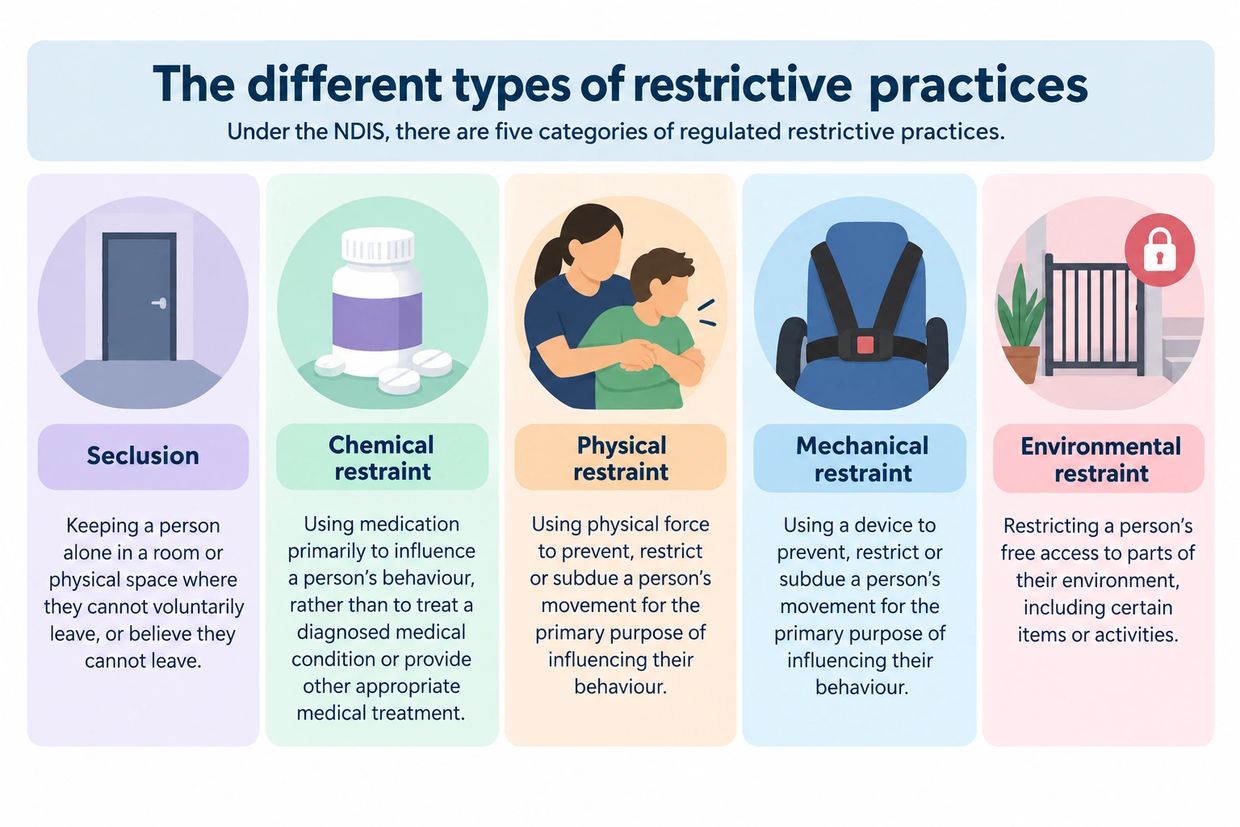
A restrictive practice is an intervention that restricts the rights or freedom of movement of a person with disability.
Restrictive practices are subject to strict requirements because of their potential to cause physical and psychological harm and infringe upon a person's human rights.
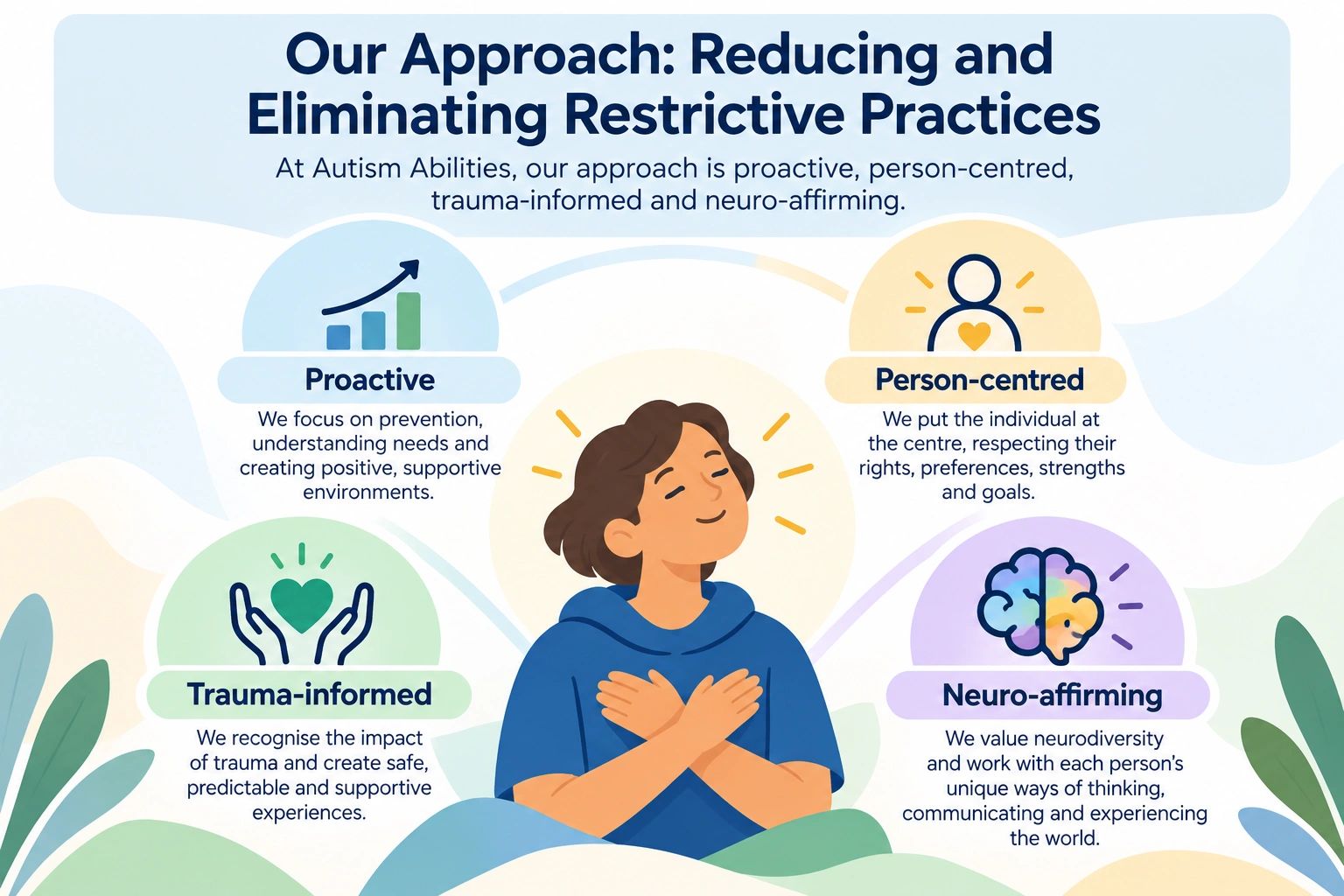
Autism Abilities believes restrictive practices should be prevented wherever possible, reduced over time and ultimately eliminated.
Why might restrictive practices be used?
Restrictive practices may be introduced in situations where a person displays behaviours that pose a significant risk of harm to themselves or others.
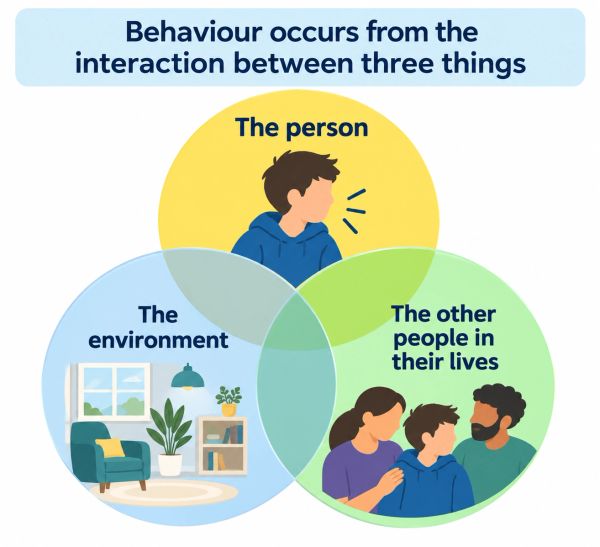
However, behaviour does not occur in isolation. What we see on the outside is often a response to something happening within the person or their environment.
Understanding why a behaviour occurs is essential to finding safer, more respectful and effective ways to provide support.
Rather than simply trying to stop or restrict a behaviour, Positive Behaviour Support seeks to understand what the behaviour may be communicating and what needs to change to improve the person's experience and quality of life.
Our Approach
Restrictive practices should be prevented wherever possible, reduced over time and ultimately eliminated.
Safeguarding Rights & Meeting NDIS Requirements
The use of regulated restrictive practices is governed by the NDIS Quality and Safeguards Commission and relevant state or territory legislation.
Where a regulated restrictive practice is considered necessary, it must meet applicable legal and regulatory requirements, including appropriate authorisation where required.
Restrictive practices must only be used as a last resort in response to a risk of harm, be the least restrictive option available, be proportionate to the risk, and be used for the shortest possible time.
Autism Abilities is a registered specialist behaviour support provider and is committed to supporting participants and their teams to understand these requirements while keeping the person's rights, dignity, preferences and quality of life at the centre of every decision.
PBS is so much more than behaviour...
Our goal is not simply to reduce behaviours of concern or restrictive practices.
It is to help people experience greater choice, meaningful participation, stronger relationships, improved communication, emotional wellbeing and a better quality of life.
We believe the most effective approach is one that creates positive and lasting changes in the person's everyday life, rather than relying on restrictive interventions.
When we understand the person, address their needs and provide the right support, we create opportunities for greater safety, independence and wellbeing.